8 AI in Advertising Examples and What Brands Learned
ImagesArt.ai
11/15/2026
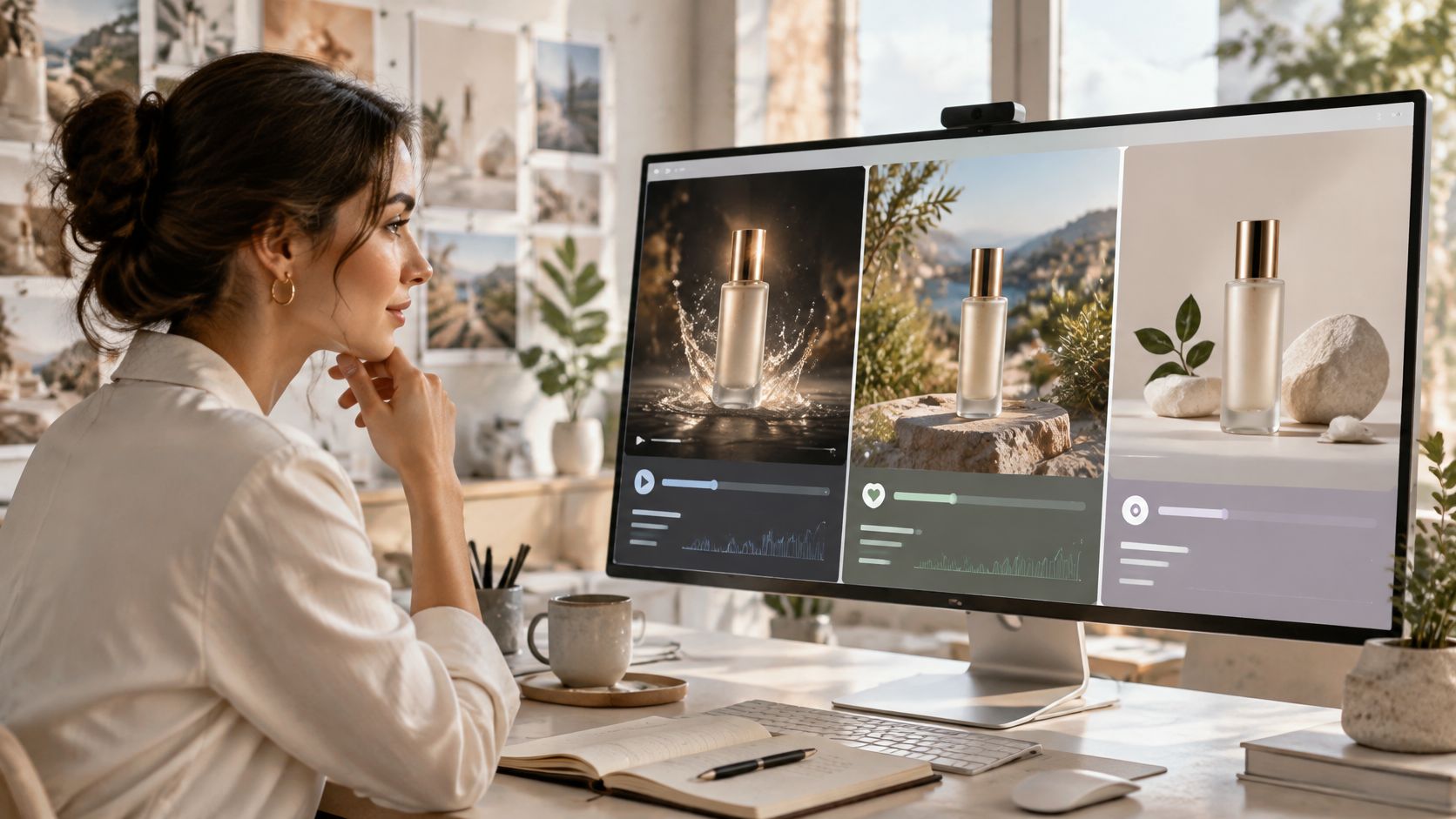
One product photo. A launch date three weeks out. No budget for a studio, a model, or a crew. That is the position small teams face when they start studying AI in advertising examples, and it is why the eight campaigns below are worth taking apart rather than admiring.
The pattern across the last few years is consistent. A brand puts a generative tool in public view, the work gets covered, and the production lesson gets buried under the headline. What transfers to a five-person team is narrower: the prompt structure, the review step, the aspect ratio, the decision about what to label.
Adoption is no longer the blocker. A Basis Technologies survey of 140 agency, brand, and publisher respondents found that 95% of marketing professionals reported using generative or agentic AI tools at least monthly in 2025, including one-third who used them daily (Basis Technologies marketing AI survey). Craft is the blocker.
Read each example as a replicable tactic: what the brand's AI did in production, the risk it exposed, and the small-team version to run with text-to-video, start-end frames, or reference images. If Meta spend is part of distribution, keep creative testing separate from lead handling and review how to turn Meta leads into booked consultations before AI creative enters that funnel.
Table of Contents
- 1. Coca-Cola "Create Real Magic" (2023)
- 2. Coca-Cola "Holidays Are Coming" AI-Generated Holiday Ads (2023 and 2024)
- 3. Heinz "Tomato Ketchup" AI Image Generation Campaign (2023)
- 4. L'Oréal ModiFace Virtual Try-On
- 5. Sephora Virtual Artist
- 6. Dove Real Beauty Pledge on AI Imagery (2024)
- 7. McDonald's Netherlands AI Holiday Commercial Withdrawal (2025)
- 8. Spotify Wrapped Personalized Campaigns
- How the Eight AI Advertising Campaigns Compare
- Turn These Examples Into a Small-Team Test Plan
1. Coca-Cola "Create Real Magic" (2023)
Coca-Cola's Create Real Magic platform handed the public a set of its own brand assets, including the logo, bottle designs, and iconic imagery, and invited people to build artwork with OpenAI's DALL·E. Entries went into a public gallery, and selected pieces were reshared on Coca-Cola's channels. The audience wasn't watching the brand use AI. The audience was using it, with permission.
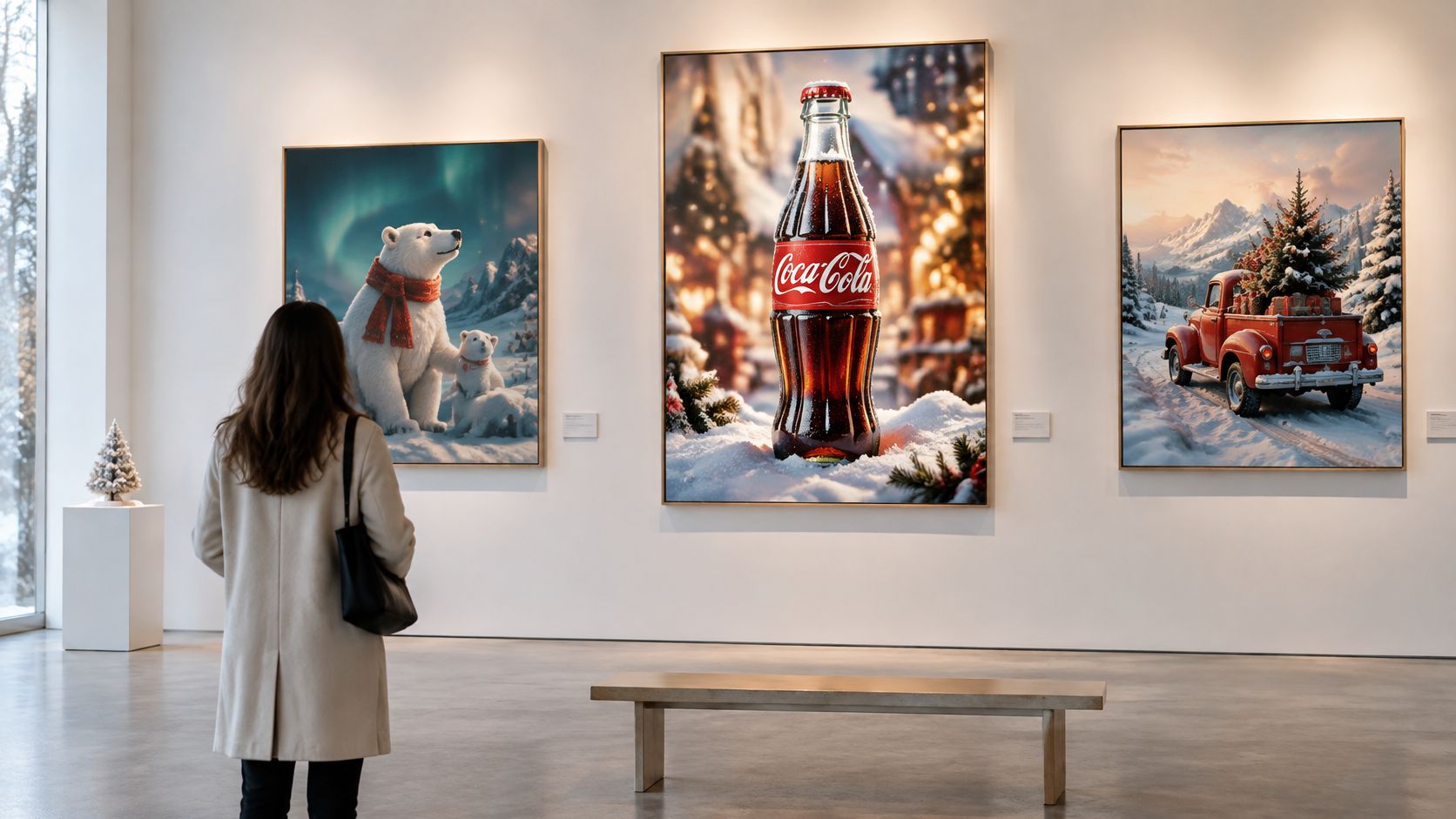
That inversion is the tactic. Most campaigns treat the model as a shortcut hidden behind a finished ad; this one made participation the proof that people want to play with the brand.
Where It Gets Risky
Opening an asset library to strangers means accepting that some outputs will be wrong. Logos get mangled, bottles warp, and a share of submissions need rejecting for rights, taste, or legibility. The fix isn't tighter control after launch. It's a published usage guide before launch that names the assets creators may use, states what they may not imply, and explains how submissions get reviewed.
The gap between a one-off activation and a working system shows up downstream. IAB's 2025 State of Data report found that only 30% of agencies, brands, and publishers reported having fully integrated AI across the media campaign lifecycle (IAB State of Data 2025). A participatory stunt doesn't build that system on its own.
The Small-Team Version
Run one prompt theme instead of an open brief, and lock the product with reference images so entries show your actual packaging.
- Name the theme: "my desk, but my product is on it" gives people something to judge.
- Hold the product steady: ImagesArt's reference mode accepts up to seven images, enough to keep a label, a bottle, and a background style consistent across variations.
- Pre-screen, then feature: review for brand safety and rights before anything reaches your feed.
If you want the same asset-first logic applied to motion, this walkthrough of AI video advertising covers how product stills become testable clips.
2. Coca-Cola "Holidays Are Coming" AI-Generated Holiday Ads (2023 and 2024)
Coca-Cola rebuilt its Holidays Are Coming truck commercial with generative tools, producing scenes, motion, and sound while keeping the visual identity audiences recognize from years of December advertising. It aired as a full broadcast spot, which is why it keeps turning up in any serious list of AI in advertising examples. Most brand AI work stops at a social cutdown. This one ran on air.
Here's the spot that started the argument.
What The Production Team Actually Built
The team worked from existing creative rather than a blank page, using AI to build scenes and motion inside a look the brand already owned. The creative direction was settled before a single clip was generated, which is the difference between an AI ad that reads as a campaign and one that reads as a demo.
Production rule: finish the storyboard before you generate anything, so every clip answers a defined scene, a camera move, and a duration.
The risk runs two ways. When a brand rebuilds a spot viewers know by heart, every visual artifact gets judged against memory, and flaws read as shortcuts rather than style. And the workforce question stops being abstract once a famous commercial gets rebuilt with models. In Influencer Marketing Hub's survey of 1,290 marketers, 70.6% said AI could outperform humans on important marketing tasks, while nearly 60% feared AI could replace their roles, up from 35.6% in 2023 (2024 AI Marketing Benchmark Report).
The Small-Team Version
Storyboard the whole sequence first, then work shot by shot. Start and end frames are the practical tool here: set the truck on one street as the opening frame, the next street as the closing frame, and let the model generate the motion between two compositions you control. In ImagesArt, render drafts at 360p to compare motion and mood cheaply, then move approved shots up to 4K for final delivery.
Holiday spots lean on characters, and a character-driven test teaches you more than an abstract scene. This walkthrough on building an AI elf video shows how a seasonal concept moves from a still frame to a finished clip.
When the master holds together, cut it for vertical placements. Google Ads lists 1080 × 1920 as the recommended HD specification and 15 seconds as the recommended length for several video ad formats (Google Ads video ad requirements).
3. Heinz "Tomato Ketchup" AI Image Generation Campaign (2023)
Heinz asked generative image models to draw ketchup, then published what came back. Using OpenAI's DALL·E 2 with prompts as plain as "ketchup," "ketchup street art," and "ketchup in space," the brand built the campaign on a single observation: the outputs kept looking like Heinz. The bottle's visual identity is embedded in the training material so thoroughly that a model asked for the category returns the brand.
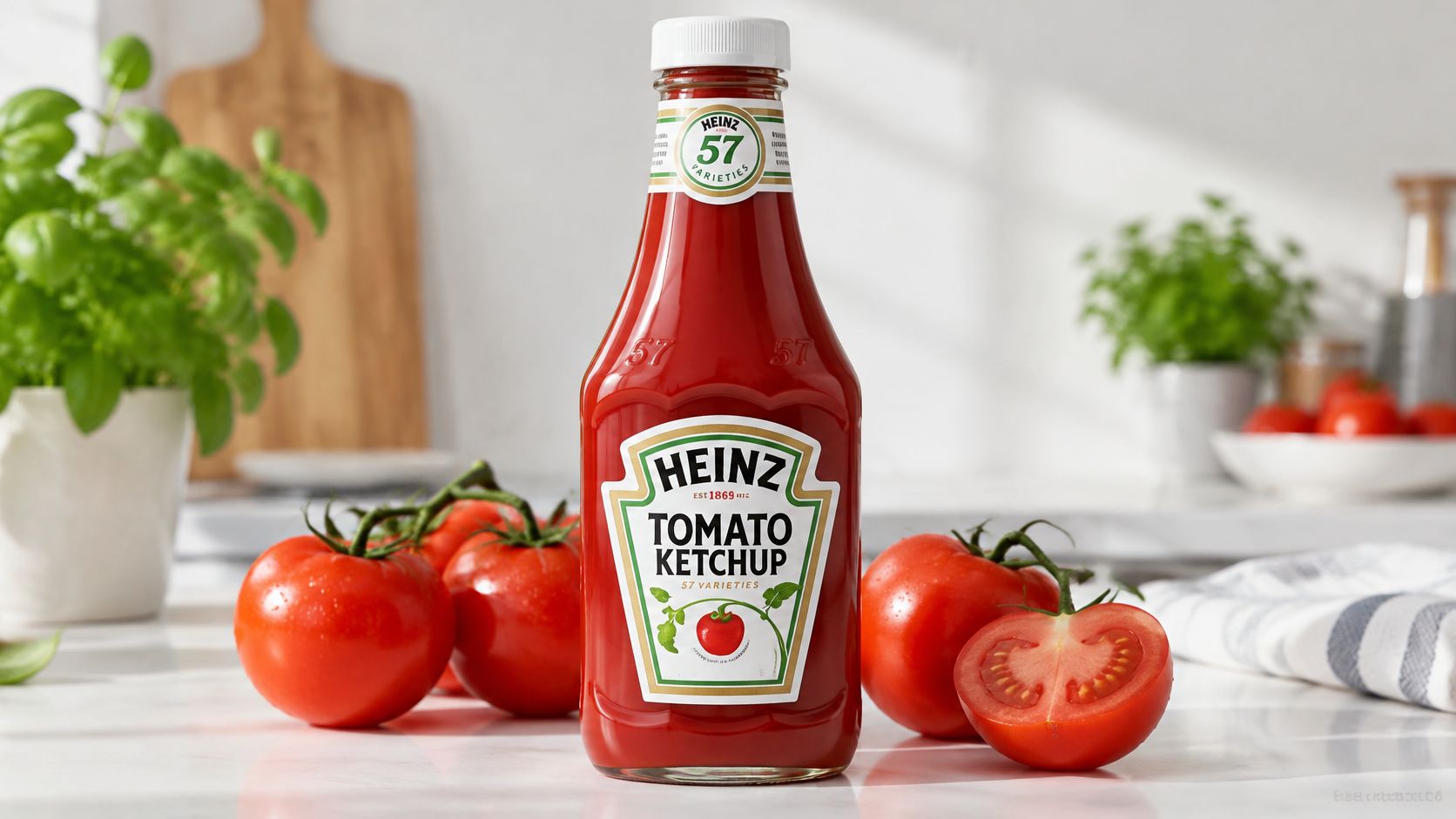
For a campaign built on prompts, the attention it earned was out of proportion to the production behind it. There was no shoot, no product photography budget, and no compositing pipeline. The brand spent on distribution and let the model's familiarity with its packaging do the creative work, which is exactly the mechanic worth stealing.
Where It Gets Risky
The idea worked because the outputs were recognizably Heinz. Run the same test on a product nobody draws from memory and the images come back generic, which means the joke lands on a competitor's bottle or on nothing at all. The honest version of this test is to prompt your category rather than your brand name and see whether your packaging survives. If the model cannot reproduce your label unprompted, this campaign's mechanics will not transfer to your product.
"Ketchup bottle on a kitchen counter, morning light, 50mm lens, shallow depth of field, red tomatoes nearby."
The Small-Team Version
Write prompts that carry product, setting, lighting, and lens in one sentence, then run the same prompt several times and keep the strongest frame. For motion, start from a clean product photo on a plain background and use image-to-video. ImagesArt's Image to Video tool turns a single product still into a short clip you can test as a Reel or a paid placement, and its Reference to Video mode holds the bottle's look steady when you need more than one generation to match. Render drafts at low resolution while you compare takes, then regenerate the winner at higher quality before it goes into paid.
4. L'Oréal ModiFace Virtual Try-On
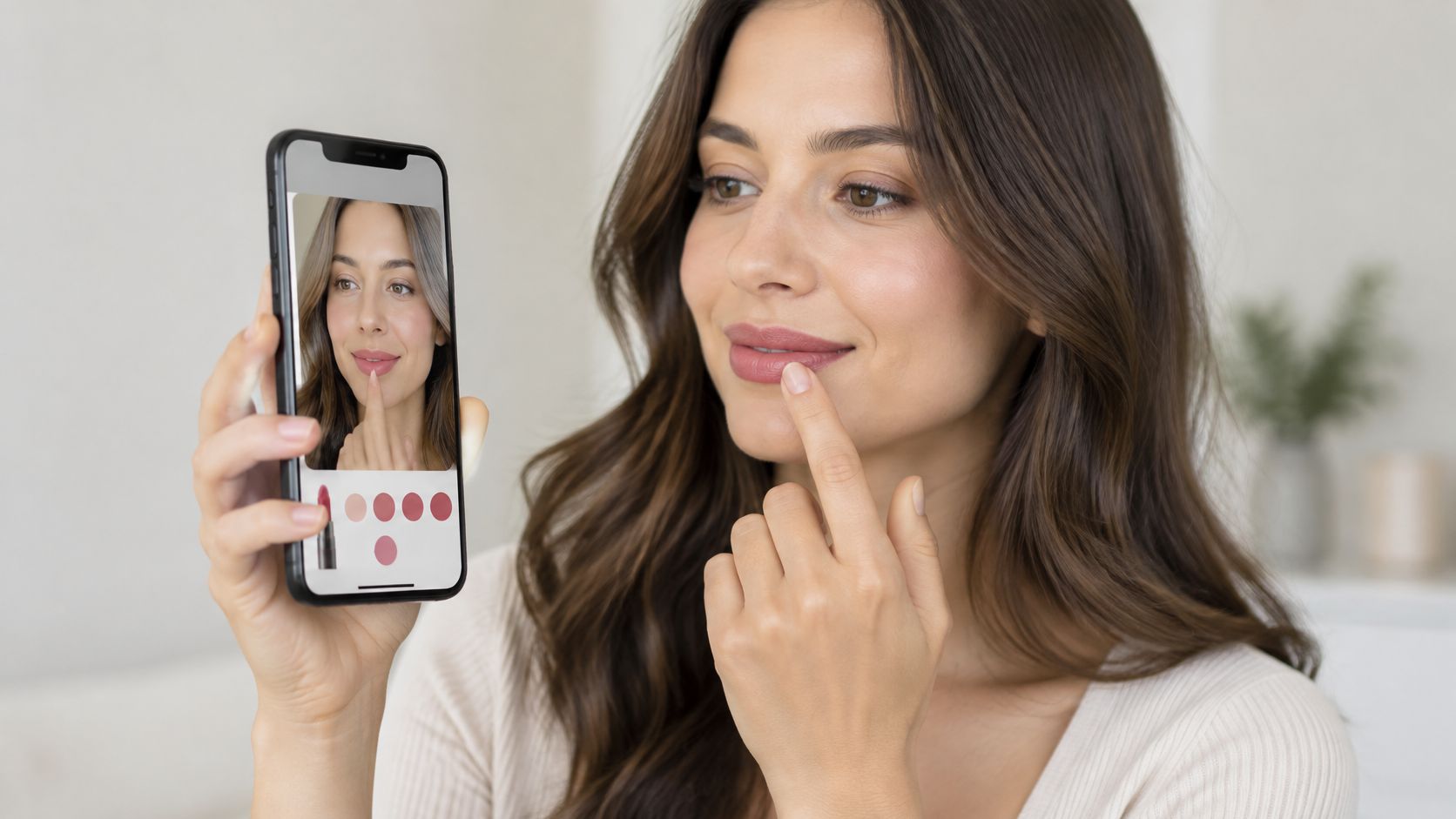
L'Oréal's ModiFace technology uses augmented reality and AI face tracking to show shoppers how a lipstick shade, a hairstyle, or a foundation might look on their own face. It sits inside brand websites and apps rather than in a campaign, and that's what makes it instructive: the AI is the shopping interface, not the advertising wrapped around it. Shade hesitation kills beauty conversion, and try-on removes a step of imagination.
Why It Works As Advertising
The tool turns a product catalog into an interactive surface, and every session produces a signal about which shades people try. That's a different job from generating a hero image. It answers a question the shopper already has, which is why the format survives budget cycles that kill novelty campaigns.
The Small-Team Version
You don't need face tracking to borrow the pattern. You need a consistent frame. Use Start-End Frame generation to show a makeup or style change from one photo to another, keeping framing, distance, and lighting identical in both images so the change reads as a result rather than a jump cut.
Match length to objective. Google's in-feed video guidance recommends 1080p HD assets in horizontal 1920 × 1080, vertical 1080 × 1920, or square 1080 × 1080, and identifies 15 to 20 seconds as the best-practice range for awareness objectives and 2 to 3 minutes for consideration objectives (Google Ads in-feed video guidance). A try-on reveal belongs in the short format. A shade-by-shade explainer belongs in the long one.
- Shoot the "after" first: the final look sets the lighting for the "before."
- Keep backgrounds neutral: busy sets make small shade differences impossible to judge.
- Label each shade in the caption: viewers screenshot and compare.
5. Sephora Virtual Artist
Sephora's Virtual Artist lets customers test makeup on their own faces through augmented reality, in the app and in some in-store experiences. Facial mapping plus a product library means a shopper can compare looks before buying, and the catalog starts behaving like a mirror. It's the retail counterpart to L'Oréal's try-on: uncertainty about a shade costs more sales than price does.
The Demo Video Is The Ad
Try-on tools live or die on demonstration, and demonstration is where small teams can compete. A ten-second clip of a product being applied digitally, cutting to the actual product in hand, does more work than a static product page. The trap is treating the demo as a technology showcase. Viewers want to see the result on a face like theirs, in light like theirs.
TikTok's auction in-feed ads accept vertical, horizontal, and square creative, but TikTok recommends 9:16 vertical video at a minimum of 540 × 960 pixels, and its guidance recommends shorter 9 to 15-second videos for many in-feed placements (TikTok auction in-feed ad specifications). Export at 1080 × 1920 when you can, and add captions in the editor rather than inside the generation.
- Open on the product, not the logo: the first second decides whether the demo gets watched.
- Cut to the product: one frame of the physical product protects trust.
- Name the shade on screen: captions that carry shade names map straight to listings.
For the reveal itself, start from a clean product photo and prompt a slow camera push-in.
6. Dove Real Beauty Pledge on AI Imagery (2024)
Dove, part of Unilever, publicly pledged not to use AI to create or alter images of women in ways that could harm self-esteem, and paired the commitment with support for AI literacy and transparency. The pledge treats generative tools as a risk to be governed, not a neutral efficiency gain. It's now part of the brand's advertising message, which is the interesting part: the policy became the creative.
The Perception Gap Nobody Prices In
Disclosure calls get made on gut feel, and the gut feel is usually wrong. IAB research found that 82% of advertising executives believed Gen Z and Millennials view AI-generated ads positively, while only 45% of those consumers did. More than half of those consumers wanted brands to disclose fully AI-generated ads or AI imagery and video, and 73% said clear disclosure would increase or not change their likelihood of purchasing (IAB AI transparency and disclosure framework).
That last number is the one to keep on the wall. Transparency isn't the conversion killer teams fear when the label explains material involvement.
A workable disclosure ladder, ordered by risk:
- Synthetic identity: a person who doesn't exist. Label it, every time.
- Simulated interaction: generated hands, voices, or reactions. Label when it could be mistaken for a testimonial.
- Product alteration: label anything that changes what the buyer receives.
- Stylistic enhancement: backgrounds, lighting, set dressing. Usually fine unlabeled.
The Small-Team Version
Write the disclosure policy before production, not after review. Keep AI work on objects, places, and styled scenes, and get written consent plus clear labeling whenever a real person appears. Our own guidance on AI body editing sets out where that line sits in practice.
7. McDonald's Netherlands AI Holiday Commercial Withdrawal (2025)
Some brands have pulled generative AI holiday commercials after public criticism of their visual quality and creative approach. The failure mode is the point. A spot can clear every policy check and still lose the audience on how it looks, and visual quality is a harder thing to test for than compliance.
The Risk It Exposed
Craft failures are cumulative and public. A hand with six fingers, a logo that drifts between frames, a face that reads as slightly synthetic: each defect gives the audience a reason to stop watching and a screenshot worth reposting. Generative speed makes it easy to produce more frames than anyone reviews, so review capacity decides whether a spot ships clean.
The counterweight is disciplined testing with a real control. Amazon ran a controlled three-month comparison for Ariat, holding the audience constant between AI-optimized multi-product display campaigns and traditional DSP remarketing, both aimed at shoppers who had viewed product pages without purchasing. Against that control, click-through rate rose 620%, effective cost per click fell 72%, product-detail-page views rose 134%, return on ad spend rose 60%, and new-to-brand ROAS rose 107% (Amazon Ads Ariat case study). Matched audiences plus a defined control group is the difference between a result and a coincidence.
If nobody on the team can name who watched the full clip before it went live, it isn't ready.
The Small-Team Version
Keep AI clips short enough to review frame by frame, and put a named reviewer on every export. A 5 to 10 second test in ImagesArt, rendered at 360p as a draft, lets you check motion and consistency before spending credits on a longer sequence. If the transition itself is the risky part, start and end frames let you lock both ends and inspect what happens between them. Then run the honest version of the test: same audience, one variable.
Human review is the step small teams under-resource first. Stimulead on scaling human review covers how to build that review pass into a repeatable pipeline rather than treating it as a final glance.
8. Spotify Wrapped Personalized Campaigns
Spotify Wrapped turns a year of listening data into a personalized recap for each user, delivered as shareable cards and short story formats, then lets the audience handle distribution. Almost none of it is designed by hand per person. The system assembles individual summaries from templates, and the templates are what people recognize.
Why The Format Travels
Personalized creative at scale only works when the frame is fixed and the data moves inside it. Wrapped's layout, type, and motion behave the same way every year, which is why a screenshot is instantly identifiable. Variation sits in the content, not the design system.
That's the same discipline behind useful AI creative testing. Dandy Blend's AI-generated advertising creative produced 2,368 clicks at a 1.1% CTR against 1,292 clicks at 0.6% for the original, and conversions rose from 481 to 1,055 while advertising cost of sale moved only from 7.0% to 6.8% (Amazon Ads Dandy Blend case study). The strongest signal wasn't the click rate. It was conversion volume holding efficiency.
The pattern isn't lost on bigger budgets either. Nielsen's 2025 Annual Marketing Report found that 71% of brands with advertising budgets above $1 billion identified AI for personalization and optimization as a key trend likely to affect their business (Nielsen 2025 Annual Marketing Report).
The Small-Team Version
Build one template with obvious slots, then generate variations against it.
- Fix the frame: aspect ratio, subject position, and type placement stay identical across every version.
- Hold the reference: ImagesArt's reference mode keeps characters, products, or locations consistent across a series of vertical clips.
- Keep clips short: a 9:16 card works at 6 to 10 seconds.
A prompt built on that template:
"Vertical 9:16, 8 seconds, product centered on a plain background, slow push-in, bold caption space at the top, consistent lighting, no text inside the frame."
Then test the clip, not the idea. One variable per round.
How the Eight AI Advertising Campaigns Compare
| Item | AI Role | Main Advantage | Main Risk |
|---|---|---|---|
| Coca-Cola "Create Real Magic" (2023) | Enables consumers to create artwork using brand-approved assets | Turns fans into co-creators and generates shareable content | Submissions vary in quality and require moderation and rights management |
| Coca-Cola "Holidays Are Coming" AI-Generated Holiday Ads (2023 and 2024) | Generates scenes, motion, and sound for holiday commercials | Extends a familiar brand story with fewer production steps | Mixed audience response and demanding human quality control |
| Heinz "Tomato Ketchup" AI Image Generation Campaign (2023) | Generates images from prompts describing ketchup and related scenes | A simple, low-cost concept showcases strong brand recognition | Narrow concept with potential image inaccuracies or artifacts |
| L'Oréal ModiFace Virtual Try-On | Tracks faces and overlays simulated beauty products | Helps shoppers assess products and shades before buying | Results depend on camera conditions and may not match real products |
| Sephora Virtual Artist | Maps faces to simulate makeup products in apps and stores | Encourages product exploration and connects try-on to purchases | Digital colors may differ from real-world shades |
| Dove Real Beauty Pledge on AI Imagery (2024) | Sets boundaries for AI-generated and edited advertising imagery | Builds trust and gives teams a clear responsible-use standard | Pledges require consistent enforcement and may face credibility challenges |
| McDonald's Netherlands AI Holiday Commercial Withdrawal (2025) | Generates characters and scenes for a holiday commercial | Highlights the need for testing and release safeguards | Poor-quality output and backlash can harm reputation and waste investment |
| Spotify Wrapped Personalized Campaigns | Analyzes listening data to create personalized recaps | Scales shareable content and encourages organic brand reach | Requires strong privacy safeguards and may feel repetitive |
Turn These Examples Into a Small-Team Test Plan
Pick one pattern from the eight above, not all eight. A product reveal, a before-and-after transition, or a personalized series is enough for a first round, and one pattern tested properly beats five started badly. Write the hypothesis before you generate anything: which metric should move, against what baseline, and what result would make you stop.
Set Up The Test Properly
Most AI ad evidence stays anecdotal because the comparison is broken. A clip generated this month gets measured against a human-produced spot from last quarter, on different placements, at a different budget. That comparison tells you nothing.
The measurement gap is structural. IAB's State of Data report found that 70% of agencies, brands, and publishers were not fully integrating AI across media planning, activation, and analysis, and its companion guidance points to holdout or synthetic-control comparisons and combined frameworks such as media mix modeling plus multi-touch attribution (IAB State of Data 2025 report). You can run a smaller version of that this week: same audience, same placement, one variable.
- Randomize the creative: AI variant against a human-made baseline, split evenly.
- Hold the media constant: same placements, same budget, same flight dates.
- Measure incremental conversions: clicks alone flatter a novelty clip.
- Log the review cost: approval time and brand-safety incidents are part of the result.
Generate Drafts, Not Final Assets
Generate short, cheap versions first. A 5 to 10 second clip at low resolution tells you whether the motion and the product read correctly, and it costs a fraction of a final render. Review every frame for hands, text, logos, and packaging accuracy before you spend on a longer sequence.
Label AI-assisted content as you go, not at the end. Retrofitting disclosure onto finished creative is where teams make promises they can't keep.
Scale Only What Survives Review
A clip earns a bigger budget by holding up under scrutiny, not by being easy to make. If the version you like falls apart on a detail a customer would notice, it isn't a final asset yet.
ImagesArt AI keeps text and image to video, start-end frame transitions, and up to seven reference images in one account, so you can compare treatments without a shoot. Videos generated on the platform are yours to use, including for commercial projects, subject to its terms of service. If you want more test designs to borrow, these ideas will help you find your next winning campaign.
ImagesArt AI gives you text-to-video, image-to-video, start-end frame transitions, and reference sets of up to seven images in one workspace, with 15 free credits and no card required on a new account. That's enough to generate a first product clip, one before-and-after transition, and three variants of the same hook, then compare them side by side. Visit ImagesArt AI to start your first test.